
Curate.
We sort the noise down to what is real, local, and worth a brother's time.

Built in Los Angeles · Founded 2026
Fortifying Health • Expanding Financial Literacy • Powering Civic Engagement • Mastering Technology & AI
UBLA is a brotherhood that connects Black men and boys to checked resources, practical playbooks, and people who show up. We do not sell outcomes or promise a better life. We put real access in your hands and walk with you while you use it.



What UBLA does

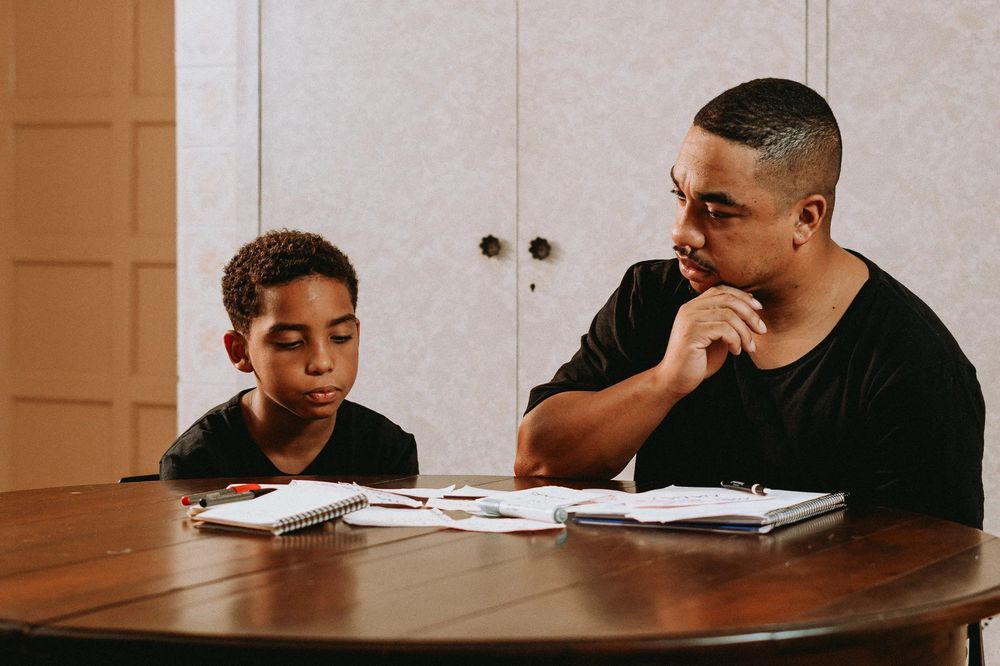

A father teaches. A son learns. That is the whole method.
Los Angeles is full of programs built to move Black men forward: free screenings, debt relief, real training, rooms where decisions get made. Finding them, trusting them, and getting through the door is the hard part. That part is OURS.
We sort the noise down to what is real, local, and worth a brother's time.
Every resource we hand you was checked by us first.
A link is not a lifeline. Brothers are. We stay with you past the click.
Across the four pillars
Health. Screenings that catch it early, mental health support without shame, and early answers for our sons.
Financial Literacy. Debt relief with a name and a phone number, coaching, homeownership paths, and the tools of ownership.
Civic Engagement. Voter readiness, plain-English ballot education, and a path to the boards and tables where your voice carries weight.
Technology & AI. Training, tools, and a community that puts AI to work for income and ownership.
Resources without connection are just rumors. UBLA is the connection. We do not sell outcomes. We hand over access and receipts. Four pillars. Four playbooks. One brotherhood. Health. Finances. Power. Technology. The keys are yours.
Our mission & vision


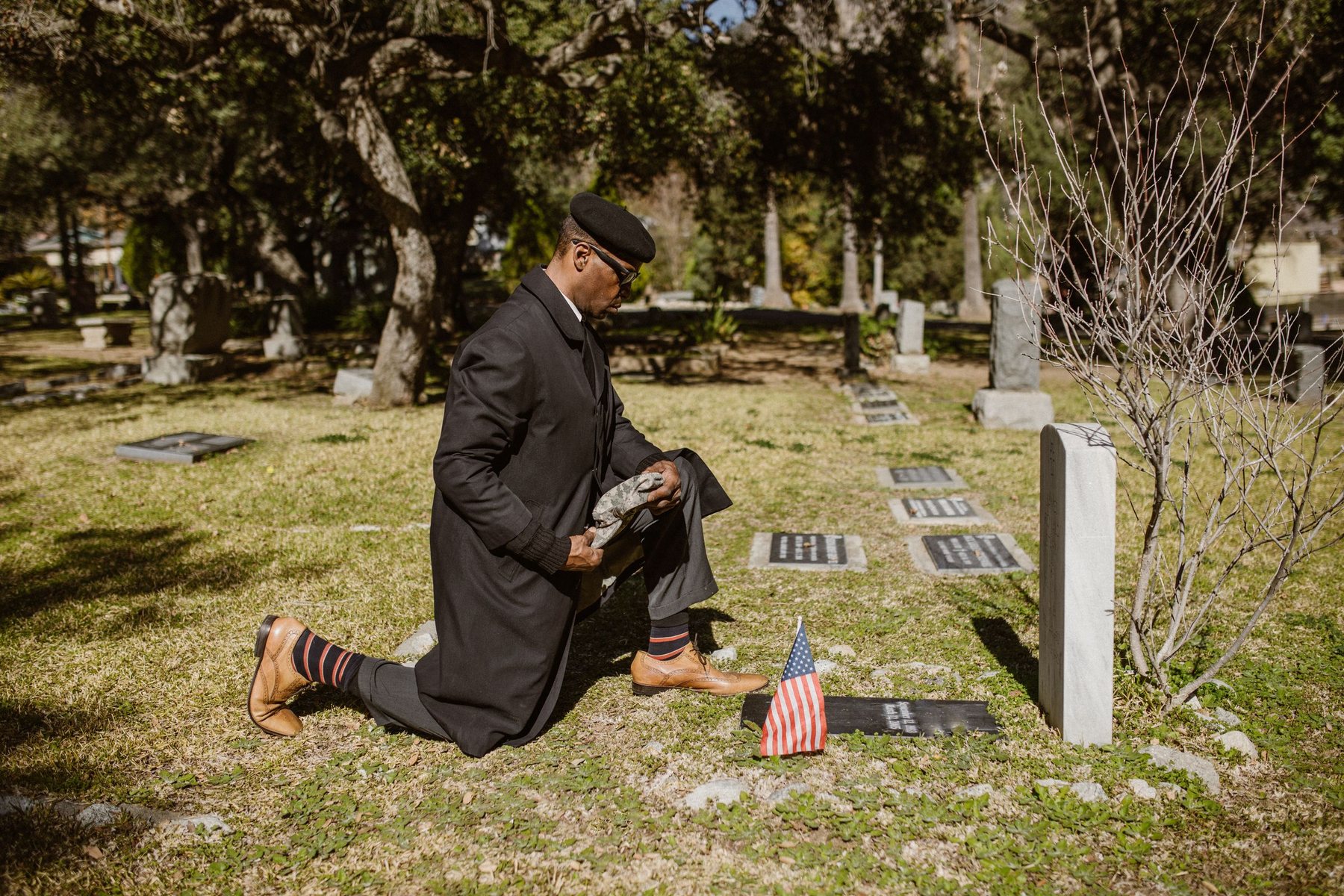
Strong at home first: present, proud, remembered.
Mission
United Brothers of Los Angeles empowers Black men and boys to thrive as leaders, entrepreneurs, fathers, and community builders, through nonpartisan civic education, economic empowerment, mentorship, and emerging technology.
Vision
a Los Angeles where Black men are healthy, economically empowered, politically informed, and technologically equipped, building wealth, shaping culture, and holding real influence over the systems that shape their lives.
When one generation reaches back and the next reaches forward, the whole city moves.
What guides us
Thriving is connected. Each pillar strengthens the others, creating the conditions for Black men and boys to live longer, build lasting security, shape public life, and lead the future.
Select a pillar to see its focus
 Health
 Financial Literacy
 Civic Engagement
 Technology & AI
How we win
Type 2 diabetes remission: the diagnosis is not the end of the story. Name remission, ask for it, and work the plan the evidence sets out.
At your next visit, say it plainly: is remission a realistic goal for me, and what is my first step? Remission means an A1C below 6.5 percent, held at least 3 months, off glucose lowering medication.
Remission is measured in A1C held over months. One number starts the climb; the recheck date proves it is moving. Never stop a medication on your own to chase the word.
DiRECT worked because the plan came with people: a structured program run through primary care, with support month after month. In DiRECT's five year follow up, the brothers and sisters who stayed with the support were the ones still in remission years later.
Remission is a state you keep, not a prize you win once. The climb is worth making from every starting point.
Why it matters
Too many brothers with type 2 diabetes have only ever been told how to live with it. There is another conversation. An international panel convened by the American Diabetes Association and the European Association for the Study of Diabetes defined remission, and the DiRECT trial showed a structured program can reach it. The brother already in the diagnosis is the brother this story is written for.
The number that matters
Five years on, among those who stayed with the program's continued support, with an average of 6.1 kilograms kept off. Of those in remission at two years, 26 percent held it to year five, and serious medical events needing hospital care ran about half the usual rate.
Source: Lean and colleagues, DiRECT 5-year extension study, The Lancet Diabetes and Endocrinology, 2024
UBLA Signature Program
Every screening that matters, decade by decade.
Every checkup and screening that matters, mapped decade by decade, with the five numbers to know by heart and the family history worksheet that pulls your dates earlier. It is how a brother stays two steps ahead of the diseases that take us earliest, instead of meeting them for the first time in an emergency room.
Get involved to request your playbook.
UBLA's playbooks, workbooks, and curricula are not posted for public download. They are working tools, made for brothers in the work. Tell us which one you want, and we will put it in your hands.
Get InvolvedPut it into action
The full tutorial lives inside the Two Steps Ahead app. Open the app
How we win
Eviction: the notice on the door is not the end of the story. The first 72 hours decide whether a brother fights from inside the process.
Three day pay or quit, cure or quit, 30 or 60 day termination. Write down the service date, the deadline, and the amount claimed. Photograph everything. Paper is evidence.
Stay Housed LA, 1-888-694-0040, for free eviction defense in Los Angeles County. City of Los Angeles tenants can also call We Are LA at (213) 584-1808. Help before a filing is worth more than help after it.
Form UD-105, filed with the court, with a fee waiver request if you cannot afford the fee. A phone call does not protect you. Only a filed response does.
An eviction filing is an event. It is not an identity, and it is not a life sentence on a man's housing.
Why it matters
The notice lands the same way for most brothers: tape on the door, found with keys already in hand, and shame first. But an eviction notice is not an eviction. It is the first page of a process, and a process has steps, deadlines, and doors. California even masks the court file from public view when a case is filed, so the fight and the settlement table protect the record too.
The number that matters
65 percent of Black renter households are rent burdened, and mortgage acceptance for Black applicants fell from 61 percent to 51 percent while mean Black home values rose to $831.6K. Rising value on paper, shrinking access in practice.
Source: State of Black Los Angeles 2025 Trends Analysis
UBLA Signature Program
Protect it. Own something. Pass it on, on paper.
Part workbook, part battle plan: audit your protection, claim the employer match, open the account, and put the will and trust on paper, with every term, IRA, trust, probate, defined in plain English before you start. It turns money from something that happens to you into something you direct.
Get involved to request your playbook.
UBLA's playbooks, workbooks, and curricula are not posted for public download. They are working tools, made for brothers in the work. Tell us which one you want, and we will put it in your hands.
Get InvolvedPut it into action
The full tutorial lives inside the Two Steps Ahead app. Open the app
How we win
Expungement: clearing the record that locks the job, the apartment, and the ballot. The sentence ends. The record does not, until a brother works the process.
Request your California record through the Department of Justice record review process, or pull the court file for each case. Nobody can match a petition to a record nobody has read.
LA County Library runs Clean Your Record clinics with the Public Defender's Office, in English and Spanish. Bring every court paper you have and let trained eyes sort the file before anything is filed.
Once a prison term is finished, the right to vote is restored automatically. The registration is not. The Secretary of State's Restore Your Vote tool confirms eligibility and points straight to registration.
Dismissed is a different answer on a background check, and a different life at the application window.
Why it matters
A felony record outlasts the sentence by decades. It shows up at the job interview, the apartment application, and the ballot box. California law gives a brother real tools: dismissal under Penal Code 1203.4, automatic relief the state grants on its own under the Clean Slate laws, and free clinics that walk a man through the paperwork. One in five Black men born in 2001 is likely to be imprisoned at some point in his lifetime. The lock is common. So is the key.
The number that matters
Down from one in three for Black men born in 1981. A lifetime likelihood of imprisonment measured across one generation, not a count of the men carrying a record today.
Source: Robey, Massoglia, and Light, Demography, 2023; The Sentencing Project, One in Five, 2023
UBLA Signature Program
Civics in plain English: the map, the ballot, the money, the meeting.
Six plain-English lessons in how power actually works: the levels of government and who decides what, how to decode any ballot, where the money flows, and how to command a public meeting, Brown Act rights included. Graduates walk into any room of government already knowing the map.
Get involved to request your playbook.
UBLA's playbooks, workbooks, and curricula are not posted for public download. They are working tools, made for brothers in the work. Tell us which one you want, and we will put it in your hands.
Get InvolvedPut it into action
The full tutorial lives inside the Two Steps Ahead app. Open the app
How we win
The biggest name in AI changed hands. Nvidia's founder resigned, and six days later the company posted the largest quarter in its history. The lesson is about dependence.
Whatever platform your work leans on, spend one hour with its strongest alternative before you need it. A backup you have touched beats a backup you have only heard of.
For every rented tool, write down what you would switch to and what the switch would cost. If the one platform your income leans on disappeared this week, your operation should still post its numbers.
Open models can be downloaded, inspected, and run on your own hardware, free from terms that change overnight. Closed models are rented power: stronger today, gone the day the terms change.
Own the parts of your operation you cannot afford to lose. Rent the rest with your eyes open.
Why it matters
Nvidia's chips sit underneath nearly every AI tool, course, and startup a brother might build on. On November 11, 2026, Jensen Huang, who co-founded the company and ran it for more than three decades, resigned as CEO. Six days later the company reported $115.8 billion in quarterly revenue, the largest quarter in its history. That is what a system built to survive its founder looks like. The question it asks every builder: would yours?
The number that matters
Source: Nvidia fiscal third quarter results, November 17, 2026
UBLA Signature Program
AI for work, business, and ownership.
The copy-and-go prompt library, the Los Angeles certification map, the one-person company launch, and know-your-rights protection when the algorithms screen.
Get involved to request your playbook.
UBLA's playbooks, workbooks, and curricula are not posted for public download. They are working tools, made for brothers in the work. Tell us which one you want, and we will put it in your hands.
Get InvolvedPut it into action
The full tutorial lives inside the Two Steps Ahead app. Open the app
Membership
Membership places you in a working network of Black men across generations. It does not promise a result. It puts specific things within reach: the playbooks, the app, Thrive, the calendar, and brothers who share what they know. What you build with them stays in your hands.
Membership is free.
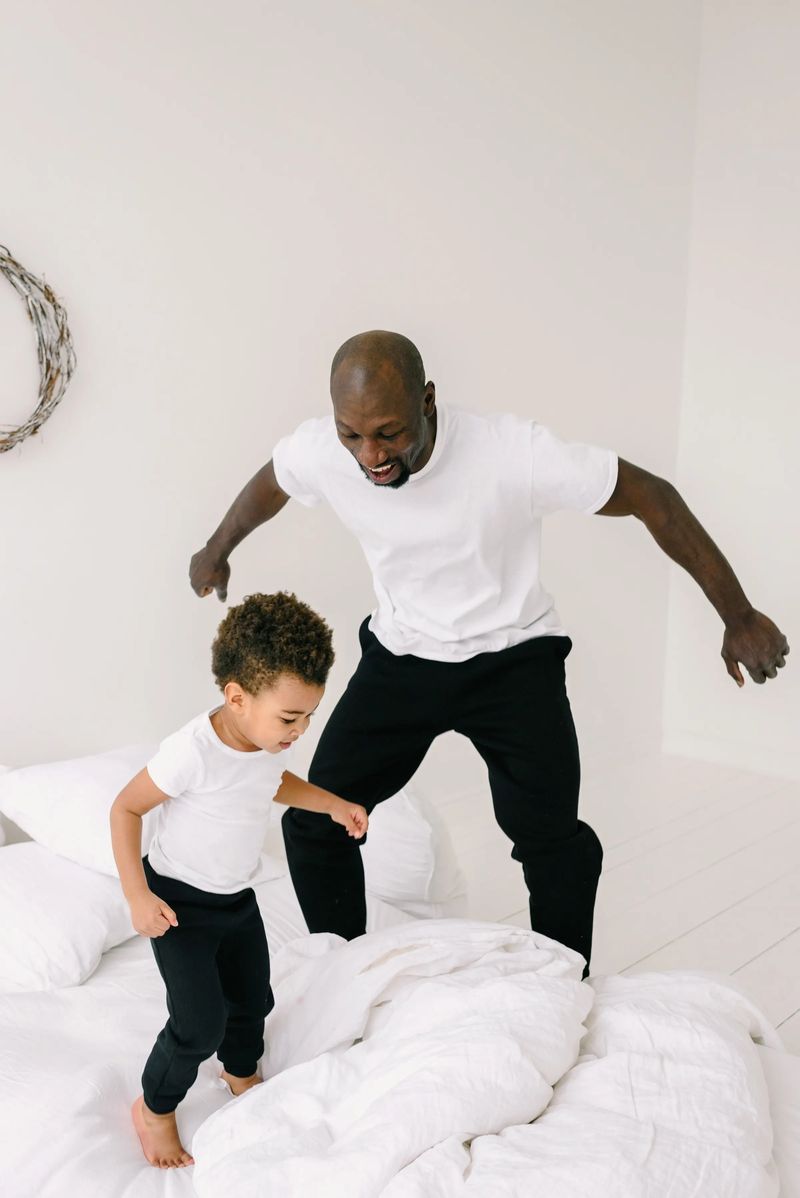

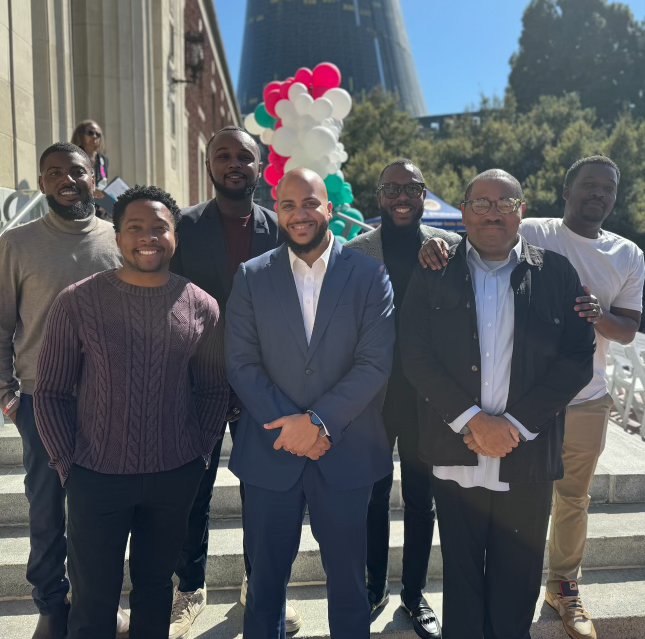

Every brother belongs in the picture.
What membership puts in your hands
The playbooks and workbooks, made for brothers in the work and never posted for public download. Request yours and it comes to you.
The Two Steps Ahead app on your phone, with the tutorials that keep you ahead of every deadline that matters.
Thrive in your inbox twice a month, and first word on gatherings, including The Fireside, through the calendar and your inbox.
A multigenerational network: boys watching, young men rising, elders reaching back.
The ask is simple. Membership is free. All we ask is that you use the information and share it with another brother. Tell us your name and where to reach you. Your welcome letter and materials come to your inbox, the app goes on your phone, and you are in the family.
Our approach
UBLA starts with the strengths already present in Los Angeles and connects people, institutions, and ideas around a shared agenda for thriving.
Our standard is simple: practical information, local relationships, and no empty promises.
Bring boys, young men, mentors, and established leaders into durable relationship.
Make powerful information practical, local, and usable in everyday decisions.
Create the confidence, coordination, and leadership needed to shape Los Angeles together.


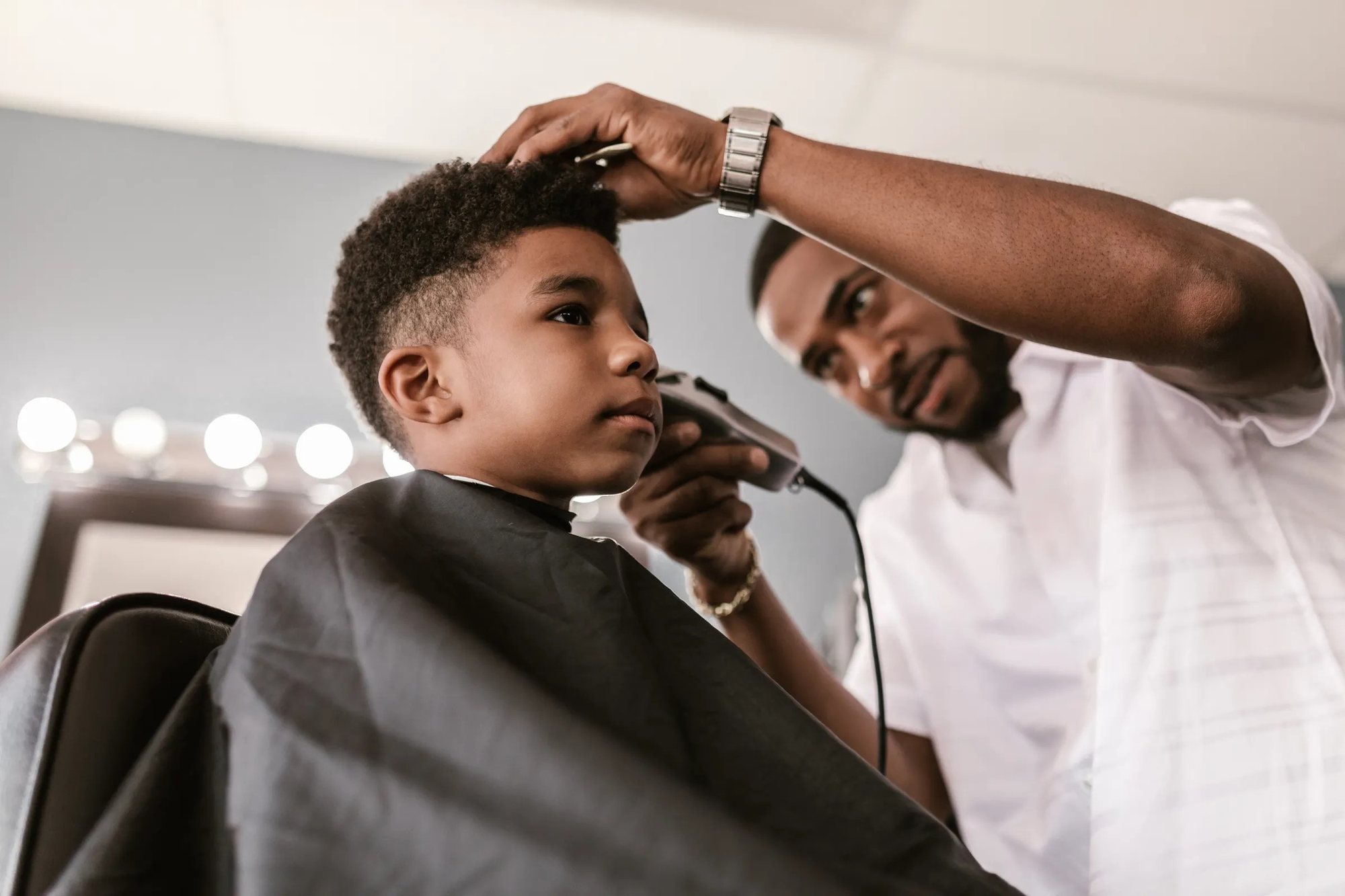
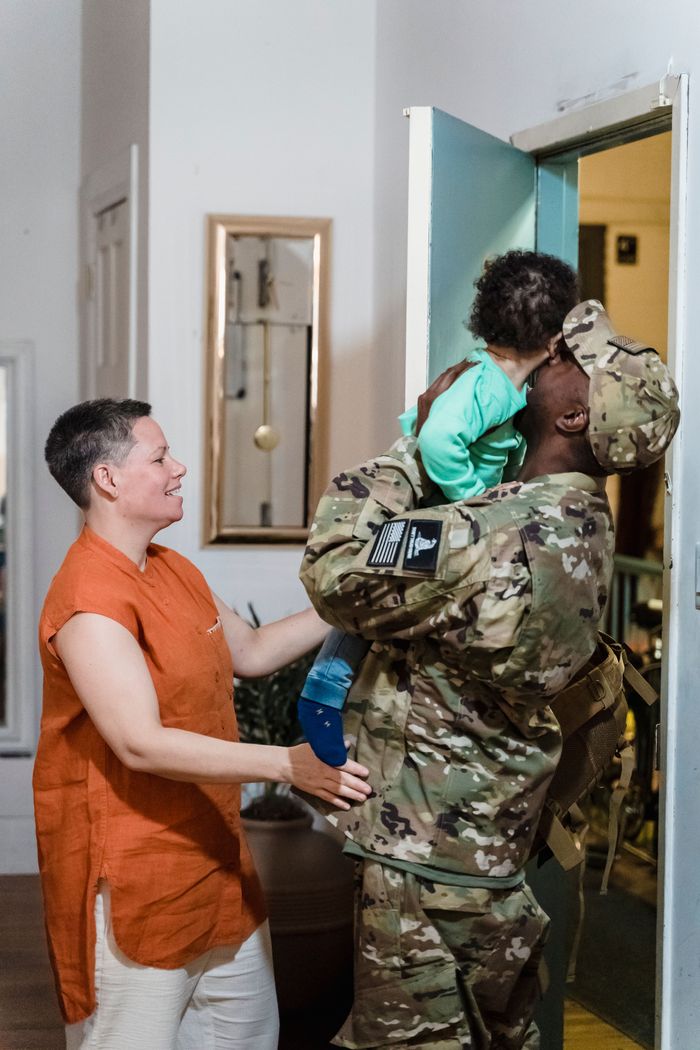
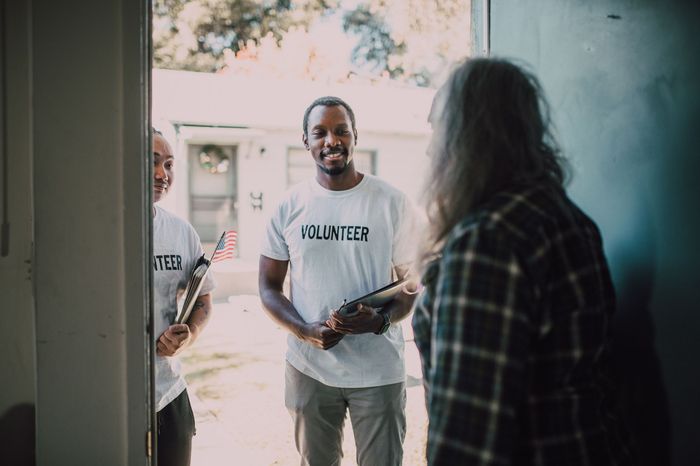
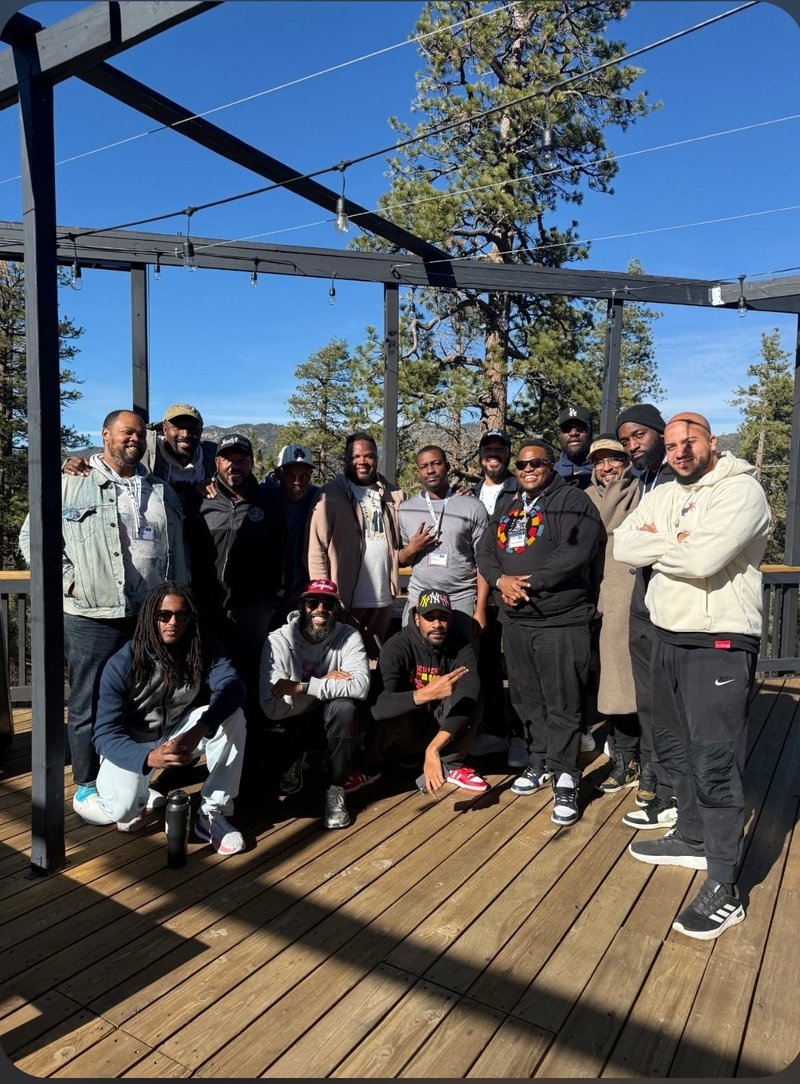
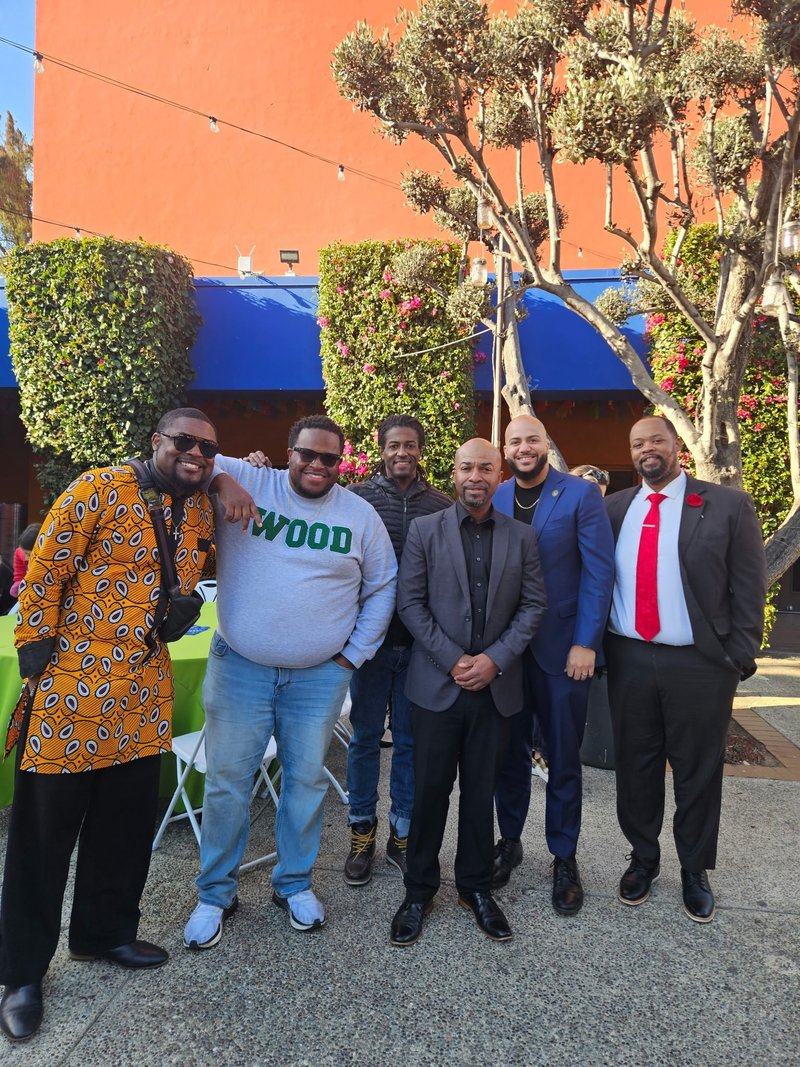
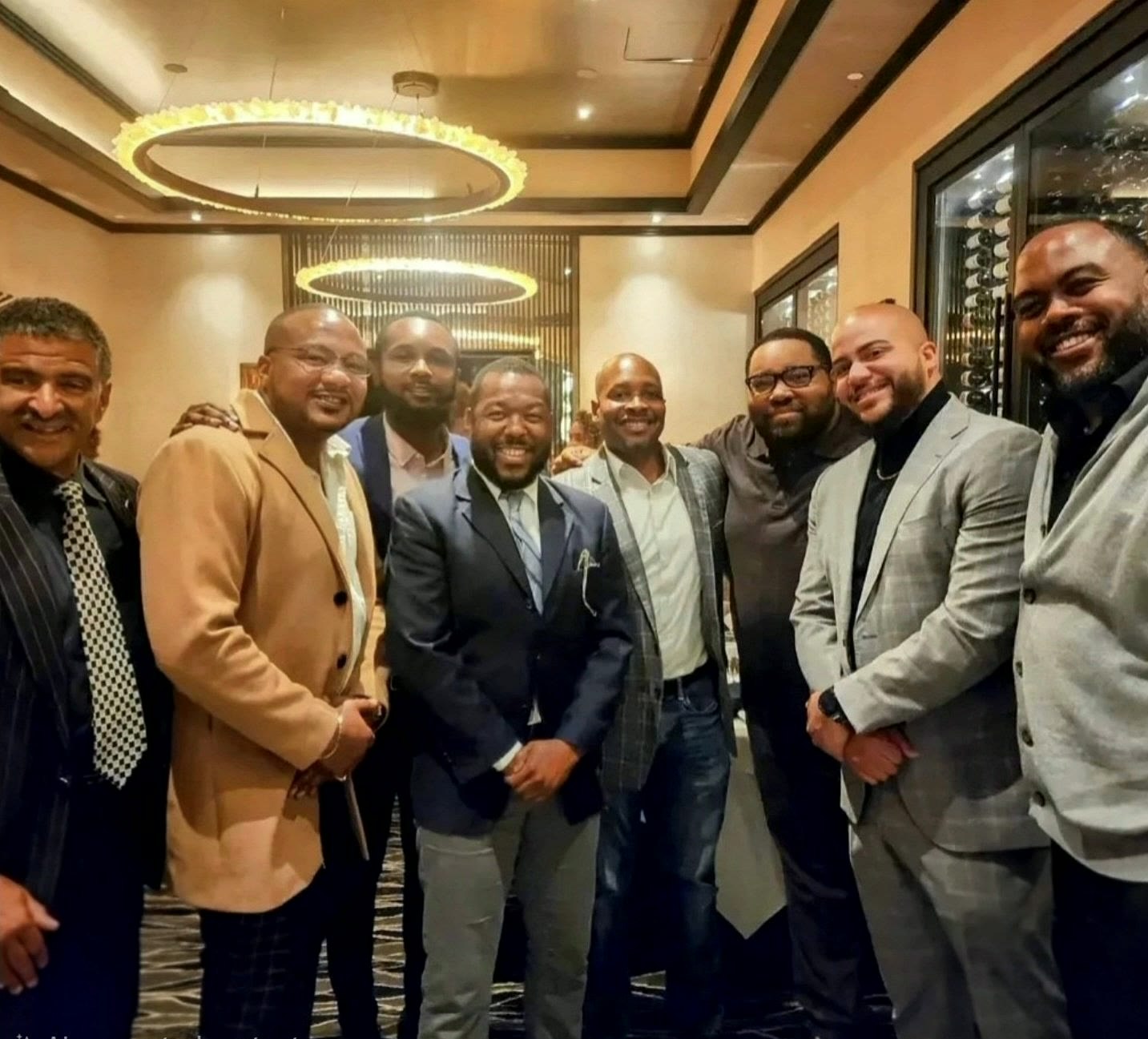
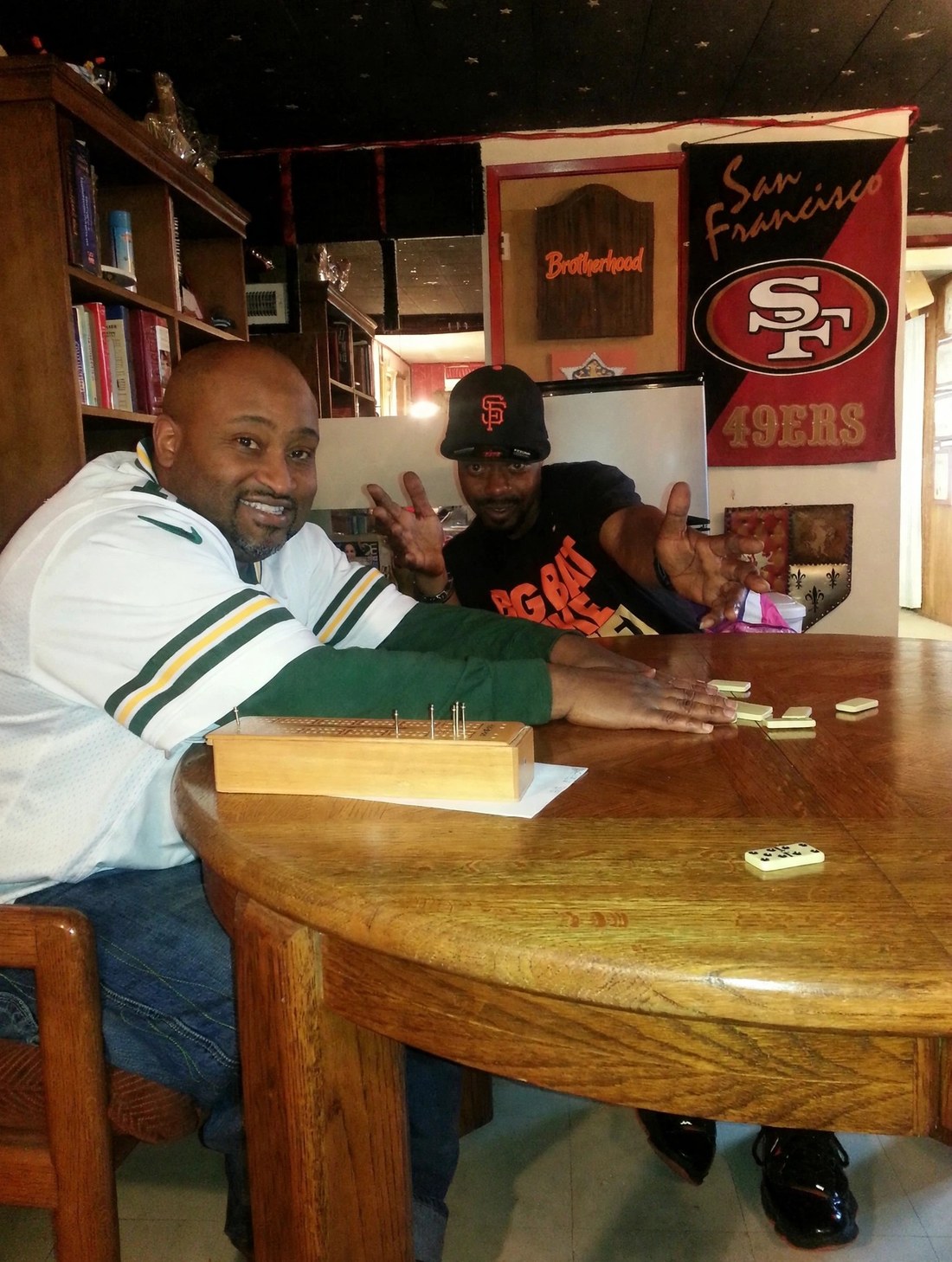
Built with community: at the table, in the work, together.






Mark the calendar
A date is a deadline, a door, or a day to show up. Put it on the calendar before it puts you behind.
Oct 24
Political Power
National Black Man Voter Day. Select LA County Vote Centers open for early voting.
Oct 27
Thrive Issue No. 2 arrives, with the debut of the CFO's Corner.
Oct 31
Political Power
Every LA County Vote Center opens for early voting.
Nov 1
Health
Covered California open enrollment opens for 2027 coverage. Get covered or renew, brothers: health is the foundation.
Nov 1
Health
Men's Health Awareness Month begins. All November: get screened, get checked, and bring a brother with you.
Nov 3
Political Power
Election Day.
Nov 2
Technology & Innovation
AfroTech Conference runs November 2 to 6 in Houston, the largest gathering of Black tech professionals in the country.
Nov 19
Health
The Great American Smokeout. One day to quit smoking, or to help a brother quit. Your lungs, your legacy.
Nov 26
Thanksgiving Day. Markets closed, and so is the grind: gratitude, family, and a full plate.
Nov 27
Financial Literacy
Black Friday. Markets close early, 10 AM our time. Spend like a builder, not just a buyer.
Nov 30
Technology & Innovation
Cyber Monday. The deals are loud; builders invest in a skill, not just a screen.
Dec 1
Financial Literacy
Giving Tuesday. Fuel the work: your gift equips Black men and boys to thrive. Give today
Nov 30
Technology & Innovation
AWS re:Invent runs November 30 to December 4 in Las Vegas, where the cloud and AI world shows its hand.
Dec 7
Political Power
California's new Legislature convenes in Sacramento at noon, and new members are sworn in. The 2027 fights start here: know who represents you.
Dec 8
Financial Literacy
The Federal Reserve meets today and tomorrow, its final meeting of 2026. Its rate decision moves mortgages, cards, and car loans: watch what it does, not just what it says.
Dec 10
Financial Literacy
LA County property tax: the first installment goes delinquent after today, with a 10 percent penalty. Homeowners, do not let the county eat your equity.
Dec 24
Christmas Eve. Markets close early, 10 AM Pacific. Be present: the best gift in the room is you, on time and off your phone.
Dec 25
Christmas Day. Markets closed. Merry Christmas to you and yours, from UBLA.
Dec 26
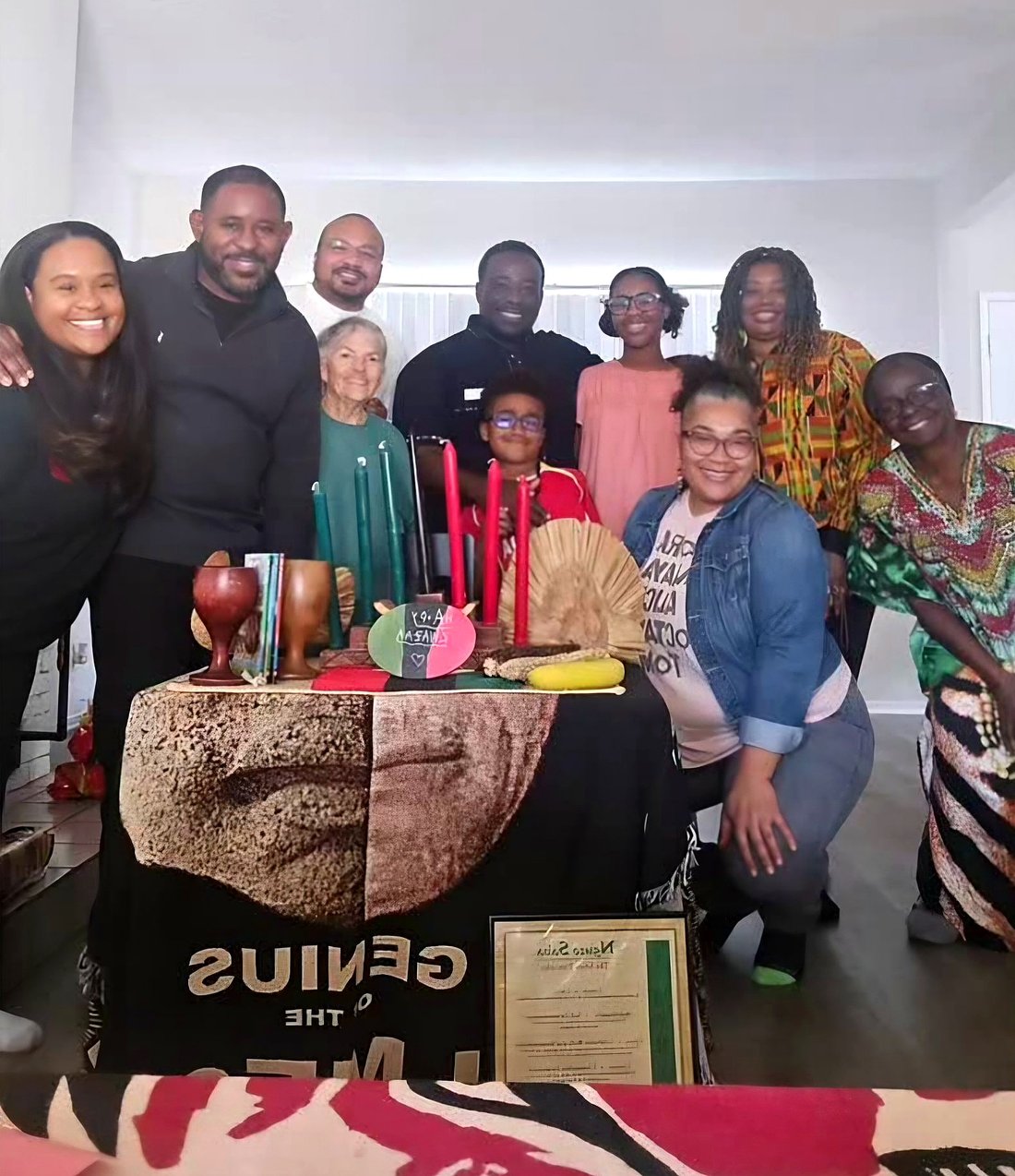
Kwanzaa begins: seven nights, seven principles, starting with Umoja, unity. Celebrations run through January 1, including right here in Leimert Park.
Dec 31
Health
New Year's Eve, and the year's last deadlines: final day to enroll at Covered California for coverage starting January 1, and the last day for 2026 charitable gifts.
Jan 1
New Year's Day. New year, same mission: equip yourself to thrive. Set the goals in writing, brothers.
Jan 6
Technology & Innovation
CES 2027 runs January 6 to 9 in Las Vegas, the biggest stage in consumer tech. Watch where the industry is heading.
Jan 18
Political Power
Martin Luther King Jr. Day. A national day of service, and UBLA brothers giving back across Los Angeles.
Jan 31
Health
Covered California open enrollment closes today. Last call for 2027 coverage: if you still need a plan, this is it.
Feb 1
Black History Month begins.
Leadership
UBLA was founded in 2026 by Los Angeles civic leaders committed to building an institution where Black men and boys can learn, lead, and thrive together.
United Brothers of Los Angeles was co-founded by Kirk Samuels, Co-Founder and CEO, and Jelani Hendrix, Co-Founder and CFO.
Two founders. One standard: say what UBLA can do, prove it in the work, and never sell what UBLA cannot deliver.



The brothers this house is built for: every generation, every ability, every story.

Co-Founder and CEO
Kirk Samuels, Co-Founder and CEO, is a civic engagement strategist with a decade of experience organizing Black and Latino communities across Los Angeles. As District Director for California State Senate District 28, he helped advance a three-bill package signed into law in 2023. Previously, as Director of Civic Engagement at Community Coalition, he supervised campaigns contacting more than 200,000 voters and trained over 400 outreach workers. He also served as Board Secretary of the Black Los Angeles Young Democrats and runs K.S Operations, a civic engagement consultancy.

Co-Founder and CFO
Jelani Hendrix, Co-Founder and CFO, is a community advocate who has spent his career bridging grassroots organizing, policy, and electoral politics. Beginning as a youth organizer with Community Coalition, he rose to Director of Policy & Advocacy at the Social Justice Learning Institute, where he helped secure the City of Inglewood's rent control ordinance. He later served as Special Assistant to the President of SEIU Local 2015, and spent three years as President of the Black Los Angeles Young Democrats.
Your playbook from UBLA's signature playbooks and workbooks. Free, delivered straight to your inbox.
We don't teach Black men to survive. We equip them to thrive.
UBLA Signature Program
Pillar · Health
Every screening that matters, decade by decade.
Straight answers on the screenings, the numbers, and the habits that keep a Black man here, healthy, for the people who count on him.
Inside
UBLA Signature Program
Pillar · Financial Literacy
Protect it. Own something. Pass it on, on paper.
The money workbook: insurance, an estate plan, and accounts titled right, so what you build reaches your children instead of a courtroom.
Inside
UBLA Signature Program
Pillar · Civic Engagement
Civics in plain English: the map, the ballot, the money, the meeting.
Know exactly who represents you, what they control, and how to move them: five levels of government, decoded and put to work.
Inside
UBLA Signature Program
Pillar · Technology and AI
AI for work, business, and ownership.
A field guide to the AI tools reshaping every trade and office: what they are, which ones matter, and how to put them to work before they put you out of work.
Inside
One request covers it: choose All four documents in the form and the complete set is yours.
Our playbooks, workbooks, and curricula are not posted for public download. Request your playbook and it is delivered to you directly.
Joining puts you inside the family: the playbooks and workbooks in your hands, the Two Steps Ahead app on your phone, Thrive in your inbox, and brothers in your corner. Tell us where to reach you, and watch your inbox and the Events calendar for what is next.
Membership is free. The only ask is simple: use what helps you and share it with another brother.
Online donations are live. Give any time through the Donate button at the top of this page, or contact us about partnering to support UBLA's mission.
Partners bring rooms, skills, resources, and funding. UBLA brings the brothers, the standards, and the follow-through.
Email us about supporting UBLAGather with us
A calendar is not community until somebody shows up. UBLA is building rooms, not just resources: Fireside chats, mixers, and the civic dates every brother should have circled.
The calendar

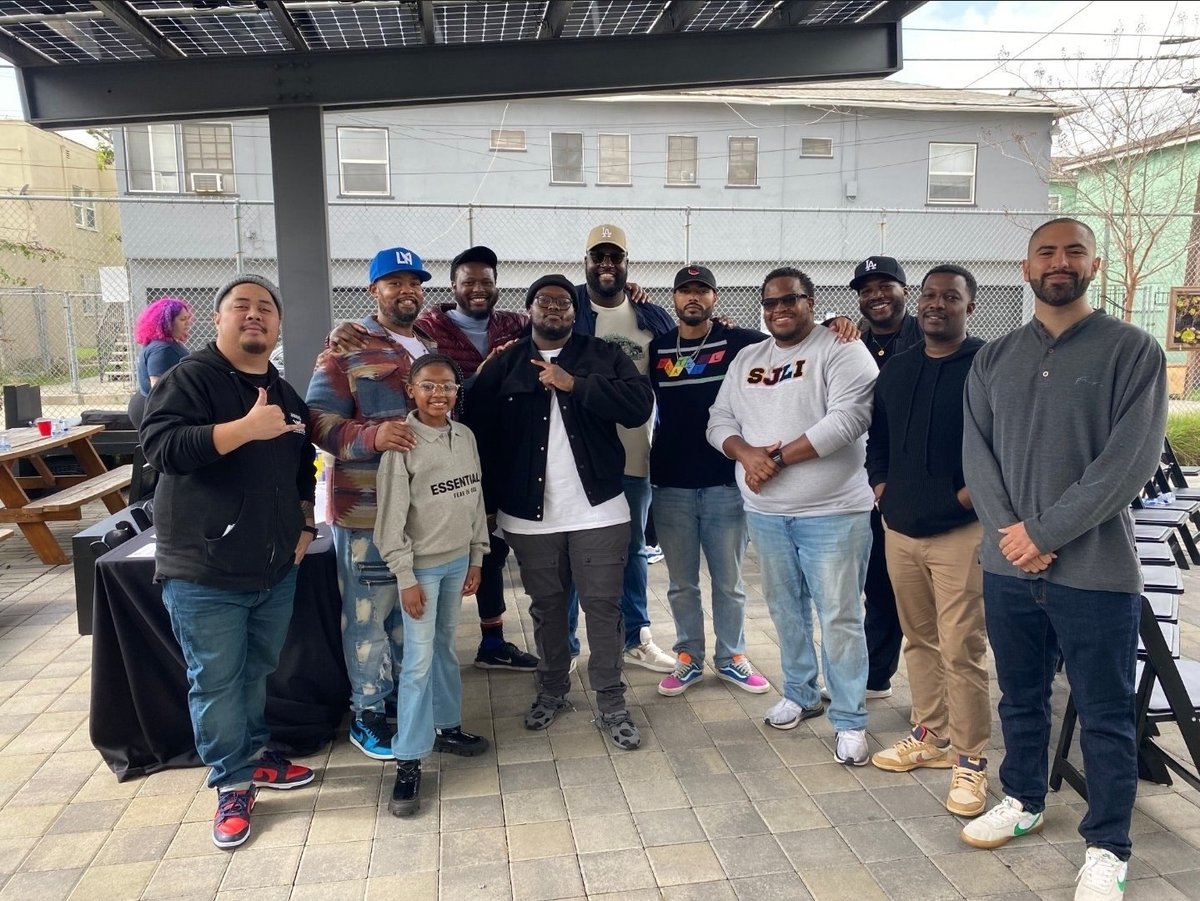

Brotherhood is a calendar, not a concept.
3 Black pill: UBLA key date. Tap one to jump to its details below. 26 Gold ring: holiday. Hover or tap to see its name. During Kwanzaa, the ring moves daily from one principle to the next.
Past months are kept in the Calendar Archive.
UBLA events
Coming November 2026
UBLA's fireside chat series: real talk for Black men on health, money, civic engagement, and the future, one pillar at a time.
Our first Fireside lands after Election Day. Date and venue to be announced. RSVP right here and the announcement reaches you first.
Date to be announced
A community mixer for Black men, and the supporters and partners who stand with us. Come meet the brotherhood, and bring a brother with you.
First date to be announced soon. RSVP right here to get on the list.
Tell us which gathering you want in on, and we will send the details the moment they are set.
RSVPs go straight to the UBLA inbox. We will email the date, venue, and details as soon as they are set.
Mark the calendar
Oct 24
Political Power
National Black Man Voter Day. Select LA County Vote Centers open today for in-person early voting, 10 AM to 7 PM daily from here to Election Day. Every Vote Center in the county opens October 31.
Oct 27
Thrive Issue No. 2 arrives, with the debut of the CFO's Corner.
Oct 31
Political Power
Every LA County Vote Center opens today for in-person early voting, 10 AM to 7 PM daily through Election Day.
Nov 1
Health
Covered California open enrollment opens for 2027 coverage. Get covered or renew, brothers: health is the foundation.
Nov 1
Health
Men's Health Awareness Month begins. All November: get screened, get checked, and bring a brother with you.
Nov 3
Political Power
Election Day. Make your plan to vote.
Nov 2
Technology & Innovation
AfroTech Conference runs November 2 to 6 in Houston, the largest gathering of Black tech professionals in the country.
Nov 19
Health
The Great American Smokeout. One day to quit smoking, or to help a brother quit. Your lungs, your legacy.
Nov 26
Thanksgiving Day. Markets closed, and so is the grind: gratitude, family, and a full plate.
Nov 27
Financial Literacy
Black Friday. Markets close early, 10 AM our time. Spend like a builder, not just a buyer.
Nov 30
Technology & Innovation
Cyber Monday. The deals are loud; builders invest in a skill, not just a screen.
Dec 1
Financial Literacy
Giving Tuesday. Fuel the work: your gift equips Black men and boys to thrive. Give today
Nov 30
Technology & Innovation
AWS re:Invent runs November 30 to December 4 in Las Vegas, where the cloud and AI world shows its hand.
Dec 7
Political Power
California's new Legislature convenes in Sacramento at noon, and new members are sworn in. The 2027 fights start here: know who represents you.
Dec 8
Financial Literacy
The Federal Reserve meets today and tomorrow, its final meeting of 2026. Its rate decision moves mortgages, cards, and car loans: watch what it does, not just what it says.
Dec 10
Financial Literacy
LA County property tax: the first installment goes delinquent after today, with a 10 percent penalty. Homeowners, do not let the county eat your equity.
Dec 24
Christmas Eve. Markets close early, 10 AM Pacific. Be present: the best gift in the room is you, on time and off your phone.
Dec 25
Christmas Day. Markets closed. Merry Christmas to you and yours, from UBLA.
Dec 26
Kwanzaa begins: seven nights, seven principles, starting with Umoja, unity. Celebrations run through January 1, including right here in Leimert Park.
Dec 31
Health
New Year's Eve, and the year's last deadlines: final day to enroll at Covered California for coverage starting January 1, and the last day for 2026 charitable gifts.
Jan 1
New Year's Day. New year, same mission: equip yourself to thrive. Set the goals in writing, brothers.
Jan 6
Technology & Innovation
CES 2027 runs January 6 to 9 in Las Vegas, the biggest stage in consumer tech. Watch where the industry is heading.
Jan 18
Political Power
Martin Luther King Jr. Day. A national day of service, and UBLA brothers giving back across Los Angeles.
Jan 31
Health
Covered California open enrollment closes today. Last call for 2027 coverage: if you still need a plan, this is it.
Feb 1
Black History Month begins.
Thrive: The UBLA Newsletter
Every issue of Thrive tracks the latest news across our four pillars, health, financial literacy, civic engagement, and technology & AI, and closes each story with what it means for us. Thrive does not deal in hype: every story names its subject, every number carries its source, and every issue points to a move you can make.
Inside Issue No. 4: Type 2 Diabetes Remission: the diagnosis is not the end of the story; Eviction: the notice on the door is not the end of the story; Expungement: clearing the record that locks the job, the apartment, and the ballot; and The Biggest Name in AI Changed Hands: the Nvidia shakeup and the open versus closed debate.

Inside Issue No. 4
Join the list and get every issue in your inbox. No spam, ever. Unsubscribe anytime.
Signups are delivered straight to the UBLA inbox and added to the Thrive mailing list.
Past issues
Every issue of Thrive lives here. New issues are added as they publish, twice a month.
Thrive: The Podcast, Episode No. 4
Kirk Samuels and Jelani Hendrix co-host this episode together: type 2 diabetes remission, the defined state, the DiRECT evidence, and the accounts of Patrick Peterson and Randy Jackson; eviction, the first 72 hours and the 10 court day Answer clock, with Tyler Perry's road from a car to a studio; expungement, automatic relief, restoring the vote, and Meek Mill and the REFORM Alliance; and Nvidia's change of hands and back again, the largest quarter in its history, the open versus closed models debate, and Kevin Durant's early stake in Hugging Face. A note on the voices: Kirk and Jelani wrote and host this episode, and their voices are read by stand-in voices from our production catalog, the same approach used for the host voices on this show.
Kirk: Welcome to Thrive: The Podcast, from the United Brothers of Los Angeles. I am Kirk Samuels.
Jelani: And I am Jelani Hendrix. This is Episode Number Four, the audio companion to Thrive Issue Number Four, dated Tuesday, November twenty-fourth, twenty twenty-six.
Kirk: Thanksgiving week, four pillars, four moves. In Health, type two diabetes remission: the diagnosis is not the end of the story. In the C F O's Corner, eviction: the notice on the door is not the end of the story. In Civic Engagement, expungement: clearing the record that locks the job, the apartment, and the ballot. And in Technology and A I, the biggest name in A I changed hands, and then changed back.
Jelani: Let us get to work. Health first.
Kirk: Health. Here is the sentence this issue is built on. Type two diabetes can go into remission. That is not a slogan. It is a defined medical state, written down by the American Diabetes Association and the European Association for the Study of Diabetes: an A one C below six point five percent, held for at least three months, with no glucose lowering medication. The body, given the right conditions, can bring its own blood sugar back under the line and keep it there.
Jelani: And the strongest evidence is a program, not a promise.
Kirk: The DiRECT trial, run through forty-nine primary care practices, and followed for five full years. Its extension study, published in twenty twenty-four in The Lancet Diabetes and Endocrinology, counted who held the ground. Thirteen percent of the people who stayed with the program's continued support were still in remission at five years. Of those in remission at two years, twenty-six percent, about one in four, were still in remission at five years. And the program group's rate of serious medical events needing hospital care ran about half that of usual care. England's health service now runs this program nationwide, and in ordinary clinics about one in three people who finished it were in remission within a year, twenty twenty-four results. No surgery. No experimental drug. A structured program, food, follow-up, and support, held over years.
Jelani: This issue's Health Highlight is two brothers, not one, printed as exactly what they are: two men's accounts. Patrick Peterson, the Pro Bowl cornerback, was diagnosed during the twenty fourteen season. He first told reporters type one, then corrected himself in public: type two. He changed how he ate, dropped a lot of weight, and by twenty fifteen he could say: I was tested again, and as of right now, I am diabetes free. Randy Jackson's road ran through an emergency room in two thousand one, blood sugar around five hundred, and gastric bypass surgery in two thousand three. Name the surgery plainly: his road was surgery plus a permanent rebuild. More than one hundred pounds lost, diabetes in remission, off medication. Two roads, one word: remission. Accounts do not prove a path. They show the path is walkable. The trial evidence is what makes the claim.
Kirk: So here is how we win. One: ask for remission by name, out loud, at your next appointment. Two: get your A one C in writing, with a recheck date three months out. Three: take the structured path, not the solo path. And start where you are. The trial took people up to six years past diagnosis, so a brother years into this is not too late. The doors are in the issue: the African American Diabetes Association, and Martin Luther King Junior Community Healthcare's diabetes program in Willowbrook.
Jelani: Now the C F O's Corner, and we are talking about the notice on the door. In Los Angeles County, the eviction filing rate for Black renter households is one point six per one hundred households. Sixty-five percent of Black renter households are rent burdened, and forty-three percent are severely burdened. A single missed paycheck can start a process most brothers think is already finished the day the paper lands. It is not finished. It is a process, and a process can be worked.
Kirk: Walk us through the first seventy-two hours.
Jelani: First, read the notice and name its type. A three day notice to pay or quit is not a court case. Nothing has been filed, and the clock that matters has not started. Second, call for help on day one: Stay Housed L A, the county's Tenant Right to Counsel program, and We Are L A, the Mayor's Fund eviction prevention line, open seven days a week. Third, if court papers do arrive, you have ten court days to file an Answer, form U D one zero five, and a fee waiver if you cannot pay. An eviction filing is an event. It is not an identity, and it is not a life sentence on a man's housing.
Kirk: And the Highlight?
Jelani: Tyler Perry. His road ran from an abusive childhood in New Orleans to living in his car while his plays failed, to building one of the largest studios in the country. The man who signs the checks once had no address to put on the application. That is the story we tell next to the numbers, because a brother listening from his car tonight needs to hear both.
Kirk: Civic Engagement. A felony record outlasts the sentence by decades. It shows up at the job interview, at the apartment application, at the ballot box. One in five Black men born in two thousand one is likely to be imprisoned at some point in his life. For brothers born in nineteen eighty-one, it was one in three. That is the generational measure from a twenty twenty-three study in the journal Demography, carried by The Sentencing Project. The record can be attacked. California law gives a brother real tools: dismissal under Penal Code section twelve oh three point four, automatic relief the state grants on its own under laws like A B ten seventy-six and S B seven thirty-one, and free clinics that walk a man through the paperwork. And that automatic relief is moving at scale: California cleared more than nine hundred thousand old conviction records in twenty twenty-four alone. The Los Angeles County Library runs Clean Your Record clinics with the Public Defender's Office, in English and Spanish.
Jelani: And the ballot comes back with the record cleared.
Kirk: In California, the right to vote returns the moment the prison term ends. You have to re-register, that part is on us, and the Secretary of State's Restore Your Vote tool walks it step by step. This issue's Civic Highlight is Meek Mill and the REFORM Alliance: a probation sentence over a dirt bike in twenty seventeen turned into a movement that has helped pass probation and parole reform in eighteen states, and governors signing record relief by the tens of thousands, more than one hundred eighty-one thousand pardons in Maryland alone. And the issue carries a second piece for every brother doing casework at a kitchen table: the county's own homelessness numbers, and the doors that fit them, from two one one L A to the Coordinated Entry System.
Jelani: Last pillar. Technology and A I, and the biggest name in the field changed hands, and then changed back. On November eleventh, Jensen Huang resigned as C E O of Nvidia, the company he founded. Colette Kress, the chief financial officer, stepped in as interim C E O. Six days later, Nvidia reported the largest quarter in its history: revenue of one hundred fifteen point eight billion dollars, up one hundred three percent, ahead of the roughly one hundred nine billion the street expected, and guidance of one hundred thirty billion for the next quarter. Then, on Monday, November twenty-third, eleven days after it accepted his resignation, Nvidia's board voted unanimously to bring Huang back as president, C E O, and board director, effective immediately. Kress returns to the chief financial officer job full time. The board said talks with Huang left it satisfied with his candor and his ability to lead, and that input from senior levels of the United States government left it confident his return poses no national security risk. The board's investigation is not finished. Huang is still set to sit for interviews with three House committees on December first, and to testify before the Senate Banking Committee on December third.
Kirk: So why does a boardroom story belong in a brother's newsletter?
Jelani: Because the lesson is dependence, and now we can measure it in dollars. While Huang was out, the market cut roughly a third off Nvidia's value. The day he came back, the stock rose thirty-one percent, its best day in more than two decades, adding back more than nine hundred billion dollars in market value in a single session and lifting the company to just under four trillion dollars. The Nasdaq rose about six percent, and the S and P five hundred about five percent, on the same news. The company posted a record quarter without its founder. The market still priced the company as if the founder was the company. If the largest company in A I can shake like that over one man, a small operation can lose a tool overnight. So: learn the alternative tool this week, name your second option in writing, and try one open model on your own machine. Open models, like the ones shared on Hugging Face, can be downloaded, inspected, and run on your own hardware. Closed models are rented power: stronger today, gone the day the terms change. This issue's Tech Highlight is Kevin Durant, who put one hundred thousand dollars of seed money and one hundred fifty thousand more into Hugging Face years ago. By one published estimate, that stake could be worth more than sixty million dollars after Nvidia's reported purchase of the company. We print the caveats with the number: the stake is not public, and the payout is not confirmed. The lesson stands either way. A brother who owned a piece of the platform early is in a different seat than a brother who only rents it. Build the system so it runs without you, and never let your whole income rest on one name, including your own. Kirk: That is Issue Number Four. Remission is a state you work toward and keep. An eviction filing is a process you can work. A record can be cleared, and a ballot restored. And the tools you depend on should be tools you can replace. Jelani: Read the full issue, with every source and every door, at we are U B L A dot org. Issue Number Five arrives Tuesday, December eighth. Kirk: We are the United Brothers of Los Angeles. We show up. Jelani: Until next time, take care of yourself, and take care of a brother.
Thrive: The Podcast, Episode No. 3
Kirk Samuels and Jelani Hendrix co-host this episode together: diabetes and the A1C test with a know your numbers box and the prostate conversation at 45, the year-end money reset and the three numbers to know before January, a synopsis of the November 3 election with Los Angeles first and all results unofficial, a Flashpoint report on the governor commuting all 548 California death sentences, and the open door into cybersecurity careers. A note on the voices: Kirk and Jelani wrote and host this episode, and their voices are read by stand-in voices from our production catalog, the same approach used for the host voices on this show.
Kirk: Welcome to Thrive: The Podcast. I am Kirk Samuels, co-founder and C E O of United Brothers of Los Angeles. This is Episode number three, the companion to Issue number three of Thrive, out Tuesday, November tenth.
Jelani: And I am Jelani Hendrix, Chief Financial Officer of U. B. L. A. Kirk and I are hosting this one together. Four pillars, four moves. Get the diabetes test. Run the year-end money reset. Learn who just won power in Los Angeles, and start the accountability clock. And walk through the open door into cybersecurity. Let us get to work.
Kirk: Health first, and we are naming it outright: diabetes. Here is the number. Eleven point five percent of Black men in the United States are living with diagnosed diabetes. That is from the C D C National Diabetes Statistics Report. The disease works in silence, brothers. A man can carry high blood sugar for years with no pain he cannot explain away, while the damage builds in his eyes, his kidneys, his nerves, and his heart.
Jelani: So the move is a test, and the test has a name: A one C. It is a simple blood draw that shows your average blood sugar over the past two to three months. No fasting. One number, and you know where you stand. Below five point seven percent is normal. Five point seven to six point four is prediabetes, the warning zone, and the last exit before a lifetime diagnosis. Six point five or higher is diabetes. Those lines come from the American Diabetes Association Standards of Care.
Kirk: And know your second number while you are at it: blood pressure. Normal is below one twenty over eighty. Stage one hypertension starts at one thirty over eighty. A1C and blood pressure, one draw and one cuff, and a brother knows more about his health than a decade of guessing. There is a second check in this issue too. November is Men's Health Awareness Month. Prostate cancer is the most commonly diagnosed cancer in Black men, and the American Cancer Society says the screening conversation starts at age forty-five for Black men, at forty if it runs in your family. If that conversation has never happened, this is the month.
Jelani: The links are in the show notes: the free one minute diabetes risk test, the C D C prevention program locator, and the prostate resources written for Black men. Get the test. Know the number. Then work the number.
Jelani: Now the CFO's Corner. The year-end money reset, and my three numbers to know before January. Number one: your credit utilization. Add your card balances, divide by your total credit limits. Keep that percentage below thirty percent, and know that lower is better. The highest credit scores often sit below ten percent. And you do not need to carry a balance to build a score. Paying in full is the strongest play there is.
Kirk: Number two?
Jelani: Your total monthly debt payments. Every minimum, every plan, every loan, one number. That is what your month costs before rent, food, and gas. If you cannot say it from memory, the fix is a list, not a lecture. Number three: your cash on hand, measured in weeks of expenses. Take what is in your accounts, divide by what one week of your life costs. That is your runway. One week is a start. Four weeks is a cushion.
Kirk: And the reset itself is one sitting. Pull your credit reports, free, every week, at Annual Credit Report dot com, the only federally authorized site. List every debt with its rate, highest first. Set one automatic transfer to savings on payday, any amount you can hold. And book the free help now: a nonprofit credit counselor, free tax prep through the I R S VITA program if you qualify, or a lending circle that builds real credit. All of those doors are in the show notes.
Kirk: Civic. The election that just happened, and Los Angeles first, because we are U. B. L. A., not U B Inglewood. Every result I am about to give you is unofficial. The county certifies on November twenty-seventh. In the unofficial count as of November seventh, Councilmember Nithya Raman defeated incumbent Mayor Karen Bass, fifty-four point four six percent to forty-five point five four percent. Mayor Bass conceded on November fifth and promised a smooth transition. Raman's term is reported to begin December fourteenth.
Jelani: And U. B. L. A. stays nonpartisan, so here is what we do with a result: we start the clock. Both candidates promised work on rent, housing, homelessness, and public safety. The winner owns those promises now. Our standing practice is the one hundred day frame. Know what was promised, watch what gets done, and grade it in the open when the first hundred days close.
Kirk: The rest of the Los Angeles ballot, quickly. Sheriff Robert Luna won a new term with about seventy percent. Marissa Roy won City Attorney with about sixty-eight percent. Measure F D, the fire department sales tax, was passing with about fifty-four percent voting yes. County Measure E, the ethics commission charter amendment, was passing with about seventy-five percent. And Council District nine? Four hundred seventeen votes apart. Too close to call, and we will not call it early. That margin is the whole sermon: local races are decided by the actual count, and every vote lands exactly as cast.
Jelani: Beyond Los Angeles, the night was widely reported as a blue wave. Democrats retook both the Senate and the House, flipping seven Senate seats and more than thirty House seats, and won five new governorships. Final counts are still unofficial, and the presidency did not change hands, so the next two years are divided government. The offices closest to your block are the ones we will keep watching.
Kirk: Now the Flashpoint, and we are reporting this straight. On November fifth, Governor Gavin Newsom announced he is commuting all five hundred forty-eight California death sentences to life in prison without the possibility of parole. The Death Penalty Information Center calls it the largest mass commutation in United States history.
Jelani: The mechanics matter. One hundred sixty-six of the commutations take effect on the governor's signature alone. The other three hundred eighty-two involve people convicted of more than one felony, and those require a recommendation from the California Supreme Court, with at least four justices agreeing, before they take effect. The governor asked the Court to act by the end of the year, before his term ends in January. As of this episode, that review is still pending.
Kirk: Three clarifications for the record. This does not repeal the death penalty. It applies only to the current sentences, and repeal would take a vote of the people. Of the five hundred forty-eight people, five hundred twenty-nine are men and nineteen are women, according to the Governor's Office. And on the question our readers ask first: no official count of how many of the five hundred forty-eight are Black men has been published. We will not guess at that number. When an official count exists, Thrive will print it with its source.
Jelani: Tech and A I. Cybersecurity: the door that is wide open. I S C two, the field's own credentialing body, counts a global workforce of five point five million people, and a gap of four point eight million between the workers the field has and the workers employers say they need. Read that precisely: it is a staffing need, not a count of job postings. In the United States, CyberSeek reports the supply of cybersecurity workers meets only about seventy-four percent of employer demand.
Kirk: And the entry lanes start at zero cost. Cisco's Skills for All platform runs a free introductory cybersecurity course for absolute beginners. N Power's Path to Tech cybersecurity course is free, part time, and online, aimed at the CompTIA Security Plus certification, and Los Angeles is one of its eligible cities. Cyversity adds chapters, mentorship, and scholarships. When the free work is done, the entry credential is I S C two Certified in Cybersecurity. No experience required, and be clear eyed: that exam is paid. Free doors first, credential second, skills documented the whole way.
Jelani: One honest note. This show only prints numbers it can source, and no current primary source publishes a Black men specific share of the cybersecurity workforce, so we print none. What we can say is the field is short millions of workers, and the doors in the show notes are open today.
Kirk: That is Issue number three. Get the A one C test, and start the prostate conversation at forty-five. Know your three money numbers before January. Learn the new names at City Hall, and write down the promises. Start the free cybersecurity course.
Jelani: We do not teach Black men to survive. We equip them to thrive. I am Jelani Hendrix.
Kirk: And I am Kirk Samuels. This is Thrive: The Podcast. See you at the clinic, at the council meeting, and in the classroom, brothers.

Thrive: The Podcast, Episode No. 2
Jelani Hendrix, UBLA's Chief Financial Officer, takes the whole episode for a CFO's Corner special: how California's Debt Reduction Program lets a father compromise the child support arrears he owes the government, the honest fine print, and the four-step play, plus this issue's key points on autism screening, the final seven days of GOTV, and putting A I agents to work. A note on the voice: Jelani wrote this episode, and it is read for him by a stand-in voice from our production catalog, a deep, warm, energetic American voice, the same approach used for the host voices on this show. Mark the dates: Saturday, October 31, every vote center in the county opens. Tuesday, November 3, Election Day.
Jelani: Welcome to Thrive: The Podcast. I am Jelani Hendrix, Chief Financial Officer of United Brothers of Los Angeles, and this is a CFO's Corner special. Issue number two of Thrive is out today, and I am taking the whole episode, because the main thing I have to tell you could change a father's balance sheet this week. Then, quickly, the three other moves from this issue: screen early, vote early, and direct the agents. Let us get to work.
Jelani: Let me talk to the brother who stopped opening the envelopes.
Jelani: Child support debt is two debts wearing one coat, and until you separate them, you cannot beat either one. The first debt is what you owe the other parent. The second is what you owe the government: when your children received public assistance, CalWORKs, or were in foster care during a period your court-ordered support went unpaid, the state covered the cost, and the law says you owe the state back. That second debt, the government-owed arrears, is the one with a door in it.
Jelani: Here is the number to remember. Owe the government at least five hundred one dollars in child support arrears, and California's Debt Reduction Program has to hear your offer. The program lets an eligible father offer the state a compromise: pay less than the full government-owed balance, in one lump sum or on a payment plan, and have the rest, including interest on that government debt, reduced. What you can offer is based on your real income, assets, and expenses, which is exactly why this program exists. A debt you can never pay collects nothing. A debt cut to what you can pay gets paid.
Jelani: Here is the honest fine print, because I am not selling you a fantasy. The program cannot touch arrears owed to your child's other parent; only the government portion can be compromised. You must be able to pay your current support and the new debt payment at the same time, and if you stop paying, the agreement dies and the full original balance comes back. And you apply through your local child support agency, with your income and expense records in hand, not through a guy on the internet charging you a fee.
Jelani: So here is the CFO's play, in order. One: find out your exact balance and how it splits between the government and the other parent; your local agency can print it. Two: if any of it is government-owed, ask about the Debt Reduction Program by name. Three: bring documentation, pay stubs, expenses, your current order, and be straight about what you can pay. Four: whatever gets agreed, automate it. The fastest way to lose a compromise is a missed payment you meant to make.
Jelani: Debt that shrinks is a plan. Debt that grows at interest while you avoid it is a trap. Walk through the door. The links are in the show notes, and UBLA's Legacy Workbook will help you build the payment into your monthly plan.
Jelani: Health, in one minute. One in twenty-seven Black eight-year-olds is identified with autism (CDC, April twenty twenty-five). Our children are being found. The question is whether yours gets found at age two or at age seven. Autism can be identified as early as two, screening belongs at the eighteen-month and twenty-four-month visits, and if a doctor tells you to wait and see, you are allowed to ask for the screening and the referral anyway. Any child under three can get a free evaluation through California's Early Start program at the Regional Centers, no referral needed to make the call. Screen early, win early. Full story and links in Issue number two.
Jelani: Civic, in one minute. Seven days to Election Day. Early voting is open, and if you missed the October nineteenth registration deadline, you are not out: conditional registration at any vote center lets you register and vote in the same visit, through Election Day. Every vote center in the county opens Saturday, October thirty-first. Election Day is Tuesday, November third, polls seven AM to eight PM, and if you are in line at eight PM, you vote. Only twenty-five percent of young Black men voted in twenty twenty-four (CIRCLE, Tufts). That is not apathy, and it is not an accident. It was manufactured on purpose. For generations, Black voters were kept from the ballot by design: literacy tests written to be failed, poll taxes priced to exclude, and intimidation for anyone who tried anyway. The poll tax in federal elections fell to the Twenty-fourth Amendment in nineteen sixty-four, and literacy tests were banned by the Voting Rights Act of nineteen sixty-five. What was designed can be dismantled, and dismantling it is the work. And know where your vote hits hardest. A presidential election runs through the Electoral College, winner take all in nearly every state, so a single vote is filtered through a statewide result. A local election has no filter: every vote is counted, the count decides, and each vote lands exactly as cast. That makes the local ballot the most representative vote you cast. The power is sitting on the table. Vote early, bring one brother, and track your ballot until it reads counted.
Jelani: Tech, in one minute. The first wave of A I answered questions. This wave does work: agents that browse, build, draft, and follow a multi-step instruction while you handle something else. The divide is not access anymore, it is purpose. Winners use agents as labor, for the business plan, the grant research, the resume, the tutoring at nine PM. Everybody else uses them as entertainment. Guardrails: agents invent facts, so verify anything with a number, a date, or a law, and never feed one your Social Security number or bank logins. UBLA's A I Cheat Code playbook in the Two Steps Ahead app will walk you through it. Direct the agents, or be displaced by them.
Jelani: That is Issue number two. Screen early. Negotiate the debt. Vote early. Direct the agents. We do not teach Black men to survive. We equip them to thrive. I am Jelani Hendrix. This is Thrive: The Podcast. See you at the vote center, brothers.

Thrive: The Podcast, Episode No. 1
Kirk Samuels and Ella host the audio edition of Thrive: the screening that saves brothers' lives, the 2026 scoreboard on Black men's jobs and money, the votes we cast this fall, and the brothers building in A I. Every pillar now closes with how we win. Mark the dates: October 19, California voter registration deadline. October 24, National Black Man Voter Day. November 3, Election Day.
Kirk: Welcome to Thrive, the podcast. I am Kirk Samuels.
Ella: And I am Ella. This is the audio edition of Thrive, the newsletter of the United Brothers of Los Angeles, where we track the news that touches Black men and boys, we close every story with what it means for us, and now we close every pillar with how we win.
Kirk: Issue number one. Ella, why are we doing this on audio when the newsletter is already written?
Ella: Because our brothers are moving, Kirk. They are driving, they are on the job, they are in the gym. A man cannot read a newsletter at a red light, but he can press play. So now Thrive comes to him.
Kirk: I love that. All right, let us get into it. Four pillars, like always. Health leads, and it should, because this one is personal.
Ella: Prostate cancer. The American Cancer Society's twenty twenty-five report is blunt. Prostate cancer is the most common cancer in American men, with an estimated three hundred thirteen thousand new cases this year. And Black men carry the heaviest load in the entire report: a sixty-seven percent higher incidence rate than white men, twice the mortality, and a death rate of thirty-six point nine per one hundred thousand, the highest of any group in the country.
Kirk: Say the quiet part out loud, though. What happens when we catch it early?
Ella: That is the whole story. When this disease is caught late, five year survival falls as low as thirty-three percent. Caught early, survival rises to between ninety and one hundred percent. Same disease, Kirk. The difference is timing, and timing is a simple blood test called a P S A.
Kirk: And now the help is coming to where we are. Tell them about the app.
Ella: Researchers at the University of Oklahoma, backed by a two point nine million dollar grant from the National Institutes of Health, are testing an app called Connect2Care. It teaches Black men about prostate cancer and walks them through an at home P S A blood test that a certified lab analyzes. No clinic visit, no copay games. And in Harlem this month, a mobile screening bus from Mount Sinai drew lines of men, forty-five to seventy-five, for free testing.
Kirk: So what does it mean for us? It means if you are forty-five or older, or forty with a family history, you ask your doctor about a P S A test this year. Not next year. This year. A brother cannot build wealth or raise his family from a hospital bed he never had to be in.
Kirk: So let us name it plainly. How do we win on health, Ella?
Ella: Three moves, all from this issue's own reporting. One: test where you are. At home tests and apps like Connect2Care take the clinic visit out of it. Two: gather where brothers gather. That screening bus ran its one hundred twelfth free screening this month. Barbershops, churches, and union halls are clinic days waiting to happen, and UBLA is building toward them right here in Los Angeles. Three: invite a brother. In Britain, the TRANSFORM trial is personally inviting every eligible Black man to get screened. Steal the play, Kirk. Do not just go. Bring somebody with you.
Kirk: Delivery is the difference. Write that down.
Ella: Amen to that. Pillar two, financial literacy. And Kirk, this study is going to make some brothers mad and motivated at the same time.
Kirk: Those are my favorite kind. Go.
Ella: The Julian Bond Institute's twenty fifty survey, done with N O R C at the University of Chicago, asked Americans about wealth and ambition. Here is the top line: young Black Americans aspire to own homes and businesses at rates that match or beat their white peers. Sixty-seven percent of Black Gen Z wants to own a business, nearly double the thirty-four percent of white Gen Z. Ambition is not the gap.
Kirk: Access is the gap. It always is.
Ella: Exactly. Only twenty-three percent of Black Millennials who wanted a home have actually achieved it, against fifty-one percent of white Millennials. Seventy-seven percent of Black Gen Z wants to build an inheritance to pass on, but only eighteen percent expect to receive one themselves. The ambition is there. The tools lag behind.
Kirk: And then there is the scoreboard, and brothers, the scoreboard is rough right now. The National Urban League's twenty twenty-six State of Black America counts five hundred sixty-seven thousand Black men who lost jobs between November of twenty twenty-five and February of twenty twenty-six. Those losses add up to about eighty-seven billion dollars in Black household income. Black unemployment has climbed to seven point eight percent.
Ella: But we do not end on the wound, we end on the move. Two numbers to hold onto. Black buying power measures two point one trillion dollars. That is leverage, if it is organized. And there is a new tool families can use today: the federal child investment accounts that launched July fourth. Any child under eighteen with a Social Security number can have one, and babies born between January first, twenty twenty-five and December thirty-first, twenty twenty-eight qualify for a one time, one thousand dollar deposit from the Treasury, claimed with I R S Form forty-five forty-seven.
Kirk: Hear me on this: if there is a baby in your family born since January of twenty twenty-five, claim that thousand dollars. It costs a form, not a fortune. Renting is a season, not a sentence, and neither is a tough jobs market. Start with what you have, and start now.
Ella: And that is how we win on money, in three moves. Claim the one thousand: that Treasury deposit is sitting there waiting on one form. Open the first account: a brokerage account, a four oh one k at work, something with your name on it, because intention needs an account to live in. And use the help that exists: first time buyer programs, down payment assistance, and credit building. Two point one trillion in buying power is leverage, but only when it is organized.
Kirk: Policy in force, account opened, plan on paper. That is the sermon.
Ella: Pillar three, civic engagement. And this one has a date with our name on it.
Kirk: Saturday, October twenty-fourth. National Black Man Voter Day.
Ella: Six organizations launched it together in Washington: the N A A C P, One Hundred Black Men of America, the National Urban League, Black Men Vote, Woke Vote, and State of the People. One shared goal: mobilize one hundred thousand Black men to vote early, organized through the places that already hold our trust. Chapters, campuses, churches, fraternities, barbershops, union halls.
Kirk: And do not sleep on what happened after the courts redrew the maps in the South. Everybody expected Black voters to retreat. Instead, turnout in majority Black counties averaged thirty-two percent in those primaries, six points above the statewide average. The answer to a harder map was more of us at the polls.
Ella: What it means for us is simple and it is soon. California's registration deadline is Monday, October nineteenth. Election Day is Tuesday, November third. Check your registration this week, make your plan, and bring one brother with you. Every vote by us is a vote for us.
Kirk: And how do we win? The way the South just showed us. Circle October twenty-fourth and vote early, together. Plug into the machinery: the N A A C P's midterm war room has already recruited fifty-two thousand volunteers, and the chapters, churches, campuses, and barbershops are the infrastructure. Join one and work your own network. And treat it as personal: after the Callais ruling, turnout in majority Black counties ran six points above the statewide average. Maps can be redrawn, brothers. A mobilized electorate still decides.
Ella: The surge is the strategy.
Kirk: Pillar four, technology and A I. Ella, this is the one where the future shows up early.
Ella: Black founders are raising real money again, and A I is driving it. Crunchbase counts six hundred forty-three million dollars raised by Black founded startups so far in twenty twenty-six, with six hundred two million of it in the first quarter alone. SambaNova, an A I hardware company, raised three hundred fifty million dollars. Now the catch, and it is a big one.
Kirk: There is always a catch. Lay it out.
Ella: That six hundred forty-three million came through just thirty-four deals, in a market where American startups raised about two hundred fifty-two billion in the same stretch. Last year, Black founders got zero point three two percent of all venture dollars. The money is real, and the door is still narrow. The barrier is not talent. It is introductions.
Kirk: Which means it is a networking problem, and networking problems can be organized against. That is literally what a brotherhood is for.
Ella: And the tools are not just for founders. Gusto's twenty twenty-six report found sixty percent of new business owners used A I to help launch, up from twenty-one percent just three years ago. A solo founder with the right tools now does the work of a small team.
Kirk: But we keep it real on this show, so here is the other side. Derek Mobley, a Morehouse man, applied to more than one hundred jobs through companies using Workday's screening software, and was rejected every single time, sometimes within hours, without one interview. He sued, arguing the A I screens out Black, older, and disabled applicants. And the courts are letting his case move forward, because if an algorithm discriminates, somebody has to answer for it.
Ella: Use the tools, and know your rights. That is A I literacy in one sentence.
Kirk: Which brings us to how we win with technology. Launch with the tools: sixty percent of this year's founders used A I to start, and one person firms are up more than twenty percent, so a solo brother with the right stack now fields a small team's output. Fix the introduction gap: mentors, warm introductions, and rooms like UBLA's are the counter to thirty-four deals taking all the money. And know your rights: in the Mobley case, the courts are letting the argument proceed that the vendor itself can be liable. If a platform rejects you within hours, save everything, and ask what screened you.
Ella: The money follows the builders, and the builders are organizing.
Kirk: All right, before we close, mark the calendar, because dates are where good intentions go to die. Monday, October nineteenth: California voter registration deadline. Saturday, October twenty-fourth: National Black Man Voter Day, vote early. Tuesday, November third: Election Day.
Ella: And if this episode earned a place in your rotation, sign up for the written Thrive at weareubla dot org, where you can also stream or download every episode of this podcast and read every issue in the archive.
Kirk: We do not teach Black men to survive. We equip them to thrive. I am Kirk Samuels.
Ella: And I am Ella. Issue number two lands in two weeks. Until then, brothers, take care of your health, your money, your vote, and your future.
Kirk: Peace.

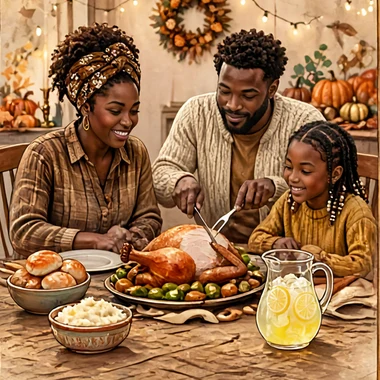

Thanksgiving at UBLA. Grateful for every brother, every family, every table we get to sit at together.
Season of Thanks · Thanksgiving, Thursday, November 26, 2026


